
- India,
- 25-Oct-2026 05:26 PM IST


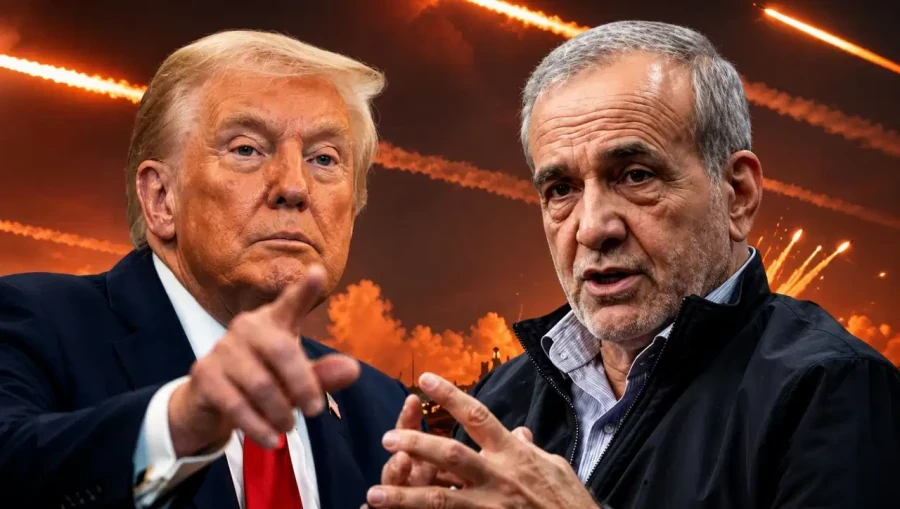
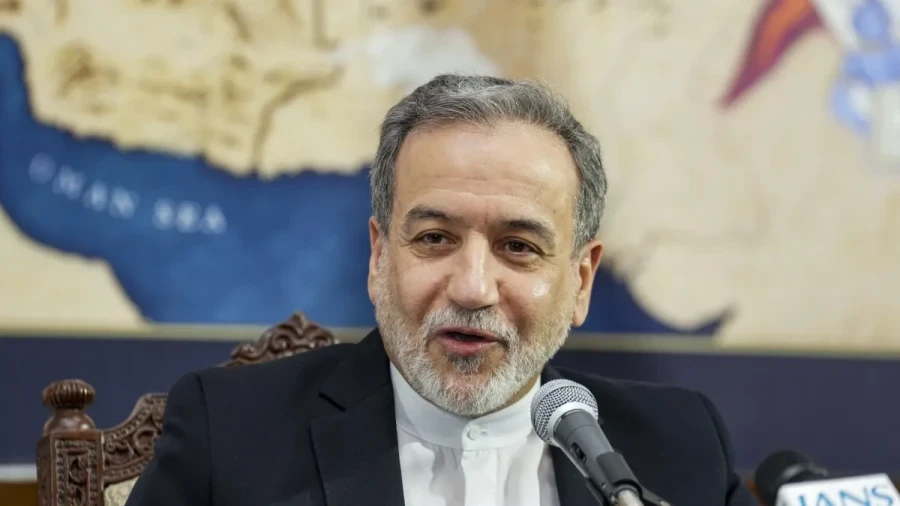
Amid renewed fears of war and escalating tensions in the Middle East, Iranian Foreign Minister Abbas Araghchi has made a strong statement declaring that whether another war breaks out or not, Iran's core policies will remain entirely unchanged. He issued a stern warning that if the United States or any other nation attempts to launch military action against Iran once again, it would prove to be a completely imprudent and reckless step. According to the Iranian news agency ISNA, Araghchi made these remarks while addressing an official event in Tehran.
During his address in Tehran, the Iranian foreign minister emphasized that following forty days of intense warfare, the situation in the Strait of Hormuz will never return to the way it used to be. He claimed that this major conflict has brought fundamental and deep shifts to the regional security architecture, establishing an entirely new reality across West Asia. Araghchi explicitly stated that the Strait of Hormuz won't remain as it was before the forty day war. Describing this conflict as a decisive turning point in regional history, he noted that the war has deeply impacted the security apparatus of the entire region. He emphasized that the conclusion of this war must happen across all fronts, signaling that Iran seeks a comprehensive resolution rather than a localized one.
Amidst this aggressive stance, the Iranian foreign minister also made a massive claim regarding American military losses sustained during the conflict. According to him, Iranian armed forces destroyed more than eighty American aircraft and advanced fighter jets during the fighting. He levied serious allegations that nearly all of these aircraft were targeted and destroyed by precision missiles while they were still on the ground. The Iranian foreign minister further claimed that virtually all American military installations in the region were completely devastated, causing heavy damage to hundreds of structures located there.
On the other side of the spectrum, strong reactions continue to emerge from the United States. US President Donald Trump signaled on Saturday that the possibility of launching fresh military action against Iran in the near future can't be ruled out. While speaking to reporters after casting his ballot in Florida, when asked directly whether the United States might launch an attack on Iran, Trump responded by asking whether people genuinely believed he would reveal that information right then. He added that perhaps tomorrow such a move is a possibility, while also noting that it's equally possible for the two nations to reach a good, big, and fantastic deal.
US President Trump claimed that Iran is currently eager to reach a settlement, but the core question remains whether Tehran will actually abide by any such agreement. Plus, he strongly defended ongoing US military operations in West Asia while praising the US Navy and armed forces. Trump asserted that American military actions have rendered all of Iranian fighter jets entirely inactive and claimed that two hundred and fifty nine Iranian ships currently lie at the bottom of the sea. Referring to the state of Iran's economy, he also highlighted that the country is currently experiencing record levels of inflation.
Meanwhile, Iran has categorically dismissed recent media reports claiming that Tehran had offered a specific proposal to reopen the Strait of Hormuz in exchange for the lifting of the US naval blockade. According to the Tasnim news agency, which is affiliated with Iran's powerful Islamic Revolutionary Guard Corps, Iran has not put forward any such new proposal before Pakistani intermediaries. Citing informed sources, the report stated that the news published by a Saudi Arabian media outlet claiming Tehran sent such a proposal to the US through Pakistan is a complete lie and a fabricated story.
Earlier reports had suggested that Iran had proposed to open the Strait of Hormuz to the United States in exchange for the removal of the American naval blockade. According to Iranian news channel Press TV, sources speaking to Tasnim completely rejected this report, labeling it as false. With military threats continuing to emanate from both sides alongside persistent claims regarding potential negotiations, the security landscape of the Strait of Hormuz and broader West Asia is set to remain a critical focal point of regional tension in the coming days.