

- India,
- 16-Sep-2026 05:29 PM IST


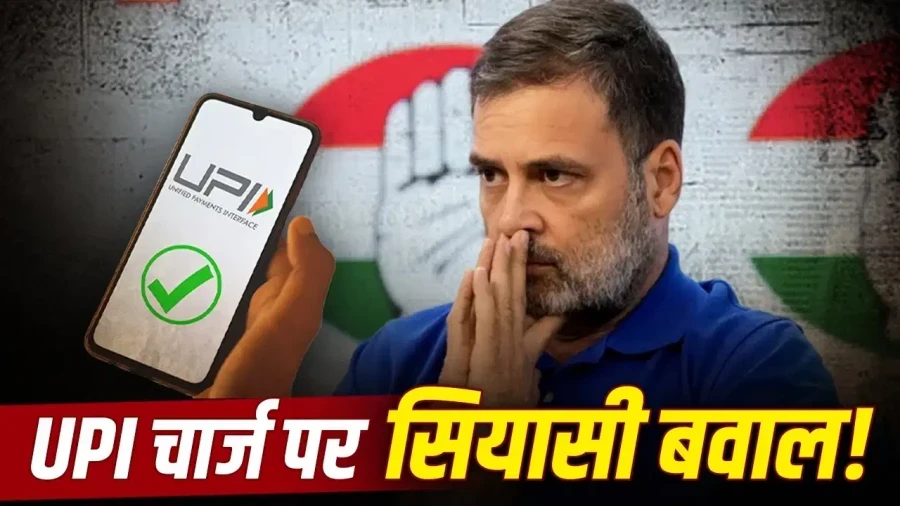
The political atmosphere in India has heated up following the government's decision to introduce a Merchant Discount Rate (MDR) on specific Unified Payments Interface (UPI) transactions. Congress leader Rahul Gandhi has taken a strong stand against this move, demanding that the government immediately retract the proposed charges on merchant UPI payments that exceed 2000 rupees. Gandhi has characterized this decision as a hidden tax on every Indian citizen and a move that favors foreign interests. However, sources within the government have indicated that there is currently no plan to reconsider or withdraw the decision, asserting that the framework was established after careful consideration of the digital economy's growth.
Technical Breakdown of the New UPI Charges
4 percent MDR is scheduled to be implemented starting from October 15, 2026. This specific charge will apply to merchant UPI transactions that are valued at more than 2000 rupees. It's crucial to clarify that this fee isn't designed to be collected directly from the individual customer making the payment. Instead, the charge will be levied on the merchant or the company receiving the payment. For high-value transactions, the government has set a maximum cap on the MDR. Specifically, for transactions amounting to 75000 rupees or more, the maximum MDR will be capped at 300 rupees. Meanwhile, person-to-person (P2P) UPI transactions will continue to remain free of charge, ensuring that personal transfers between individuals aren't impacted by this new policy.
Rahul Gandhi Allegations of Surrender to US Interests
Rahul Gandhi has launched a scathing attack on Prime Minister Narendra Modi regarding this policy shift. Sharing a video, Gandhi recalled an anecdote about former Prime Minister Indira Gandhi, while he mentioned that when Indira Gandhi was once asked whether she leaned to the left or the right, she replied that she stood straight. Contrasting this with the current leadership, Rahul Gandhi claimed that PM Modi has a different concept, suggesting that he's neither left nor right but has decided to lie down before Donald Trump. Gandhi alleged that by imposing this UPI tax, the Prime Minister has effectively taxed every Indian and transferred significant wealth to American companies. He urged the Prime Minister to show courage, stop surrendering to American pressure, and withdraw the UPI tax immediately.
The Economic Impact and Government Justification
In his critique, Rahul Gandhi pointed out that while the government claims customers won't be charged, the fees imposed on shopkeepers will eventually be passed on to consumers through increased prices. He noted that although the number of transactions above 2000 rupees accounts for only about 5 percent of the total volume, these transactions represent nearly 65 percent of the total transaction value of the UPI ecosystem. Gandhi argued that American payment companies have long opposed India's zero-MDR policy and that the Modi government has now opened the door to changing this policy under pressure, similar to American trade deals, while he described the Prime Minister as a compromised leader who is surrendering to international corporate interests.
Government Stance on Digital Infrastructure
Responding to the criticism, sources associated with the government have defended the decision, stating that the implementation of MDR on UPI was a well-thought-out move. They emphasized that the decision to introduce MDR once the digital infrastructure was firmly established was actually made five years ago. According to these sources, the MDR will only affect approximately 4 percent of the total transactions, meaning the vast majority of common people using UPI for daily small-value purchases will remain unaffected. The government maintains that there will be no reconsideration of the UPI merchant charges, as the revenue is necessary to sustain and further develop the digital payment infrastructure that has been built over the last few years.
Modi ji, roll back the UPI tax. Now. pic.twitter.com/IIt46zMgCG
— Rahul Gandhi (@RahulGandhi) September 16, 2026


